
The nasal turbinates are small structures inside the nose that clean, warm and humidify the air before it reaches the lungs. They consist of a bony core covered by tissue rich in blood vessels and a mucous membrane.
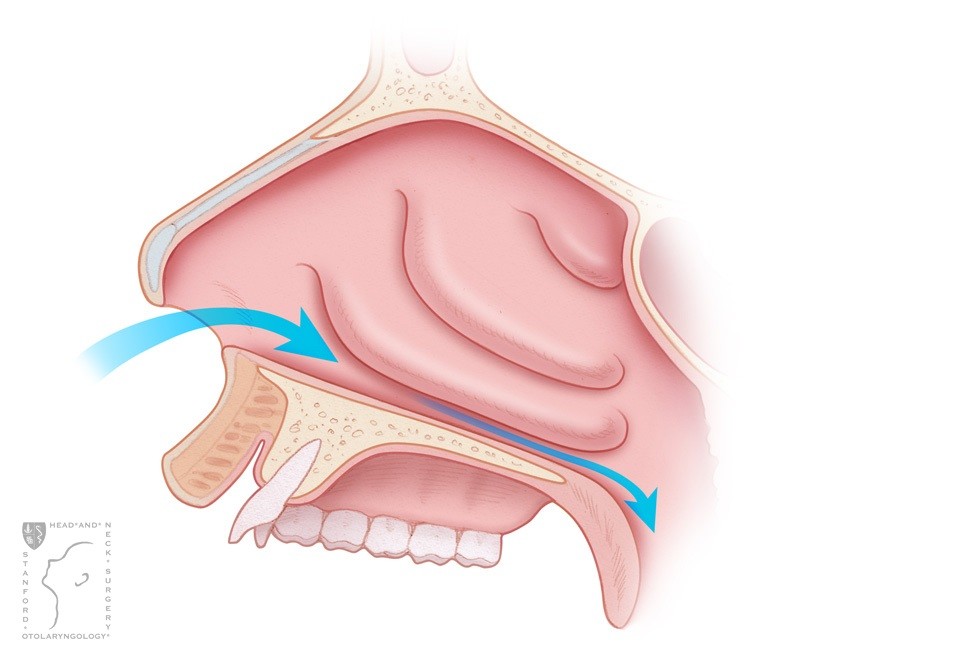
When these structures swell because of allergies, irritants or recurrent infections, the space available for airflow becomes narrower. The usual consequences are a blocked nose, difficulty breathing and excessive mucus production.
When this procedure is considered
Radiofrequency reduction is considered when nasal blockage persists despite medical treatment — corticosteroid sprays, antihistamines or saline rinses — and when the examination shows that the main cause is enlarged turbinates rather than a deviated nasal septum.
If the main finding is a deviated septum, the solution is septoplasty. In some cases both are performed together, because the blockage stems from both causes at the same time.
The assessment is carried out with nasal endoscopy, which allows the degree of swelling and the condition of the mucosa to be seen directly.
What radiofrequency reduction is
It is a minimally invasive procedure, performed at the clinic under local anaesthesia, to reduce the volume of the nasal turbinates and improve airflow.
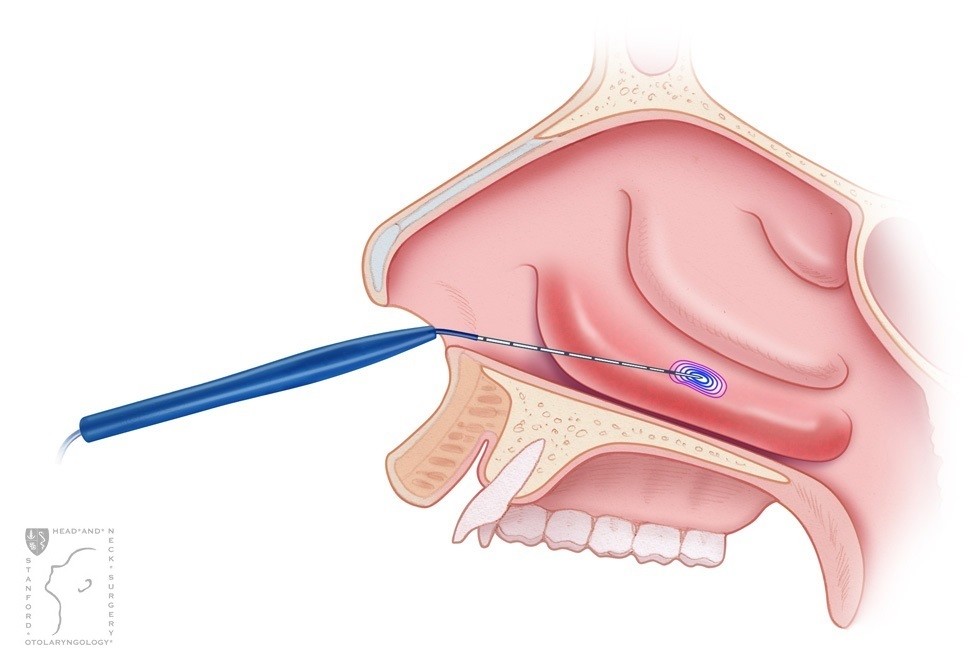
Unlike surgical removal of tissue, radiofrequency works from within: the surface mucosa remains intact, so its cleansing and humidifying function is preserved.
How the procedure is performed
A thin instrument is inserted into the turbinate. The radiofrequency energy creates a controlled lesion in the excess tissue beneath the mucosa. Over the weeks of healing, this tissue shrinks and the airway space widens.
Practical details
- Duration: about 10 minutes
- Anaesthesia: local, the patient stays awake
- Pain afterwards: almost none
- Effect on the appearance of the nose: no external change
- Sense of smell: not affected
- Return to activities: the same day or the following day
What to expect after the procedure
After treatment, crusting may form inside the nose for around three weeks. During this period breathing may feel even more difficult than before the procedure — this is expected and resolves on its own as the mucosa heals.
For a faster recovery we recommend:
- Frequent rinsing with saline solution
- Using antibiotic ointment as instructed, to prevent infection
- Avoiding forceful nose blowing in the first few days
The true improvement in breathing is assessed once the crusts have cleared completely.
When to contact us
Please contact the clinic if, after the procedure, you experience bleeding that does not stop, pain that worsens instead of easing, fever, or foul-smelling discharge from the nose.
Can the turbinates enlarge again?
In rare cases the turbinates may swell again over time, especially if the underlying cause — allergy, for example — is not managed. The procedure can then be repeated.
For this reason, when the blockage is related to allergy, treating the allergy remains part of the plan even after the procedure.
Book an assessment
If your nose is constantly blocked and medication is not helping, an endoscopic examination will clarify the cause and which solution suits you.